


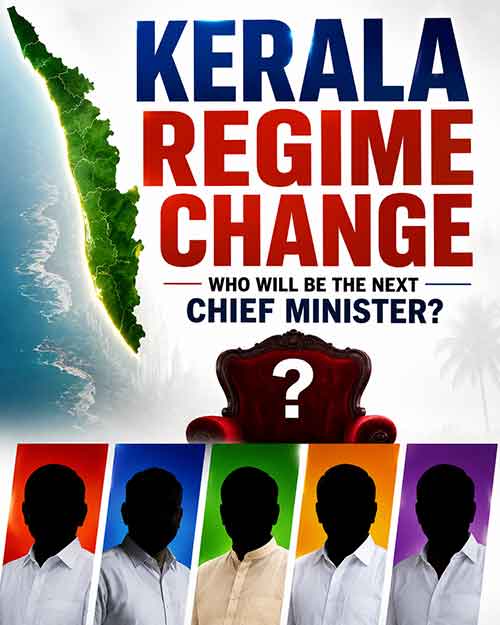
As Kerala moves toward a new political phase, succession debates, leadership ambitions, alliance equations, and governance challenges are beginning to reshape the state’s political landscape.
Kerala politics is entering a crucial transition period as discussions around future leadership and the next Chief Ministerial race gain momentum across major political parties. With changing voter expectations, rising youth influence, economic pressures, and internal party dynamics, the battle for Kerala’s next political leadership is expected to become one of the state’s most closely watched political developments.
While the current political structure remains stable, conversations within political circles are increasingly focused on who could lead Kerala in the next phase of governance and how parties are preparing for the future.
Leadership Questions Begin to Surface
Both the ruling alliance and opposition parties are witnessing growing discussions around next-generation leadership.
Within Kerala’s political ecosystem, several senior leaders continue to dominate state politics, but younger leaders and emerging power centers are slowly gaining visibility. Political observers believe the coming years could trigger one of Kerala’s biggest leadership transitions in decades.
Questions surrounding:
- succession planning,
- generational change,
- coalition balance,
- regional representation,
- and public image
are becoming increasingly important inside party structures.
The race for future leadership is expected to intensify as elections approach and parties begin positioning their strongest faces before voters.
Economic Challenges Could Define the Next Government
One of the biggest challenges for Kerala’s future Chief Minister will be managing the state’s economic pressures.
Kerala continues to face concerns related to:
- public debt,
- unemployment,
- rising welfare expenditure,
- infrastructure financing,
- and private investment attraction.
Despite strong human development indicators, the state faces increasing pressure to generate sustainable economic growth and large-scale employment opportunities for its educated youth population.
Experts say the next government may need to focus heavily on:
- technology investment,
- startup ecosystems,
- tourism modernization,
- industrial expansion,
- AI and digital economy opportunities,
- and infrastructure development.
Balancing welfare politics with economic growth could become one of the defining political challenges ahead.
Youth and Employment Emerging as Key Political Issues
Kerala’s younger population is expected to play a decisive role in shaping future political narratives.
Issues such as:
- job creation,
- migration,
- startup opportunities,
- digital economy growth,
- skill development,
- and private sector expansion
are becoming increasingly important among first-time and urban voters.
Many political analysts believe future elections in Kerala may shift away from traditional ideological campaigns toward governance performance, employment generation, and economic opportunity.
The state’s large educated workforce is also demanding faster modernization and stronger global investment opportunities.
Coalition Politics May Become More Competitive
Kerala’s political system has traditionally revolved around strong alliance structures and disciplined party organizations. However, changing voter behavior, social media influence, and emerging political narratives are creating new uncertainties.
Political experts say:
- alliance management,
- minority and community equations,
- urban voter sentiment,
- and anti-incumbency trends
could significantly impact the future Chief Ministerial race.
National political developments may also influence Kerala’s political strategies as parties attempt to expand their influence in the state.
Governance Expectations Are Rising
The next Kerala Chief Minister may face higher public expectations than ever before.
Citizens increasingly expect:
- faster infrastructure projects,
- efficient governance,
- transparent administration,
- better disaster management,
- urban modernization,
- digital public services,
- and stronger economic planning.
Climate-related challenges, coastal management, healthcare modernization, and sustainable urban growth are also expected to become major governance priorities.
The future leadership will likely be judged not only on political ideology but also on administrative efficiency and economic results.
A Defining Political Transition Ahead
Kerala’s political future is entering a period of transition where leadership identity, economic strategy, and governance capability may become more important than traditional political narratives alone.
The upcoming Chief Ministerial race is expected to reflect a larger battle over the future direction of Kerala itself — balancing welfare, development, technology, employment, and political stability in a rapidly changing India.
As leadership equations evolve and parties prepare for the next electoral cycle, Kerala could soon witness one of its most significant political contests in recent history.