


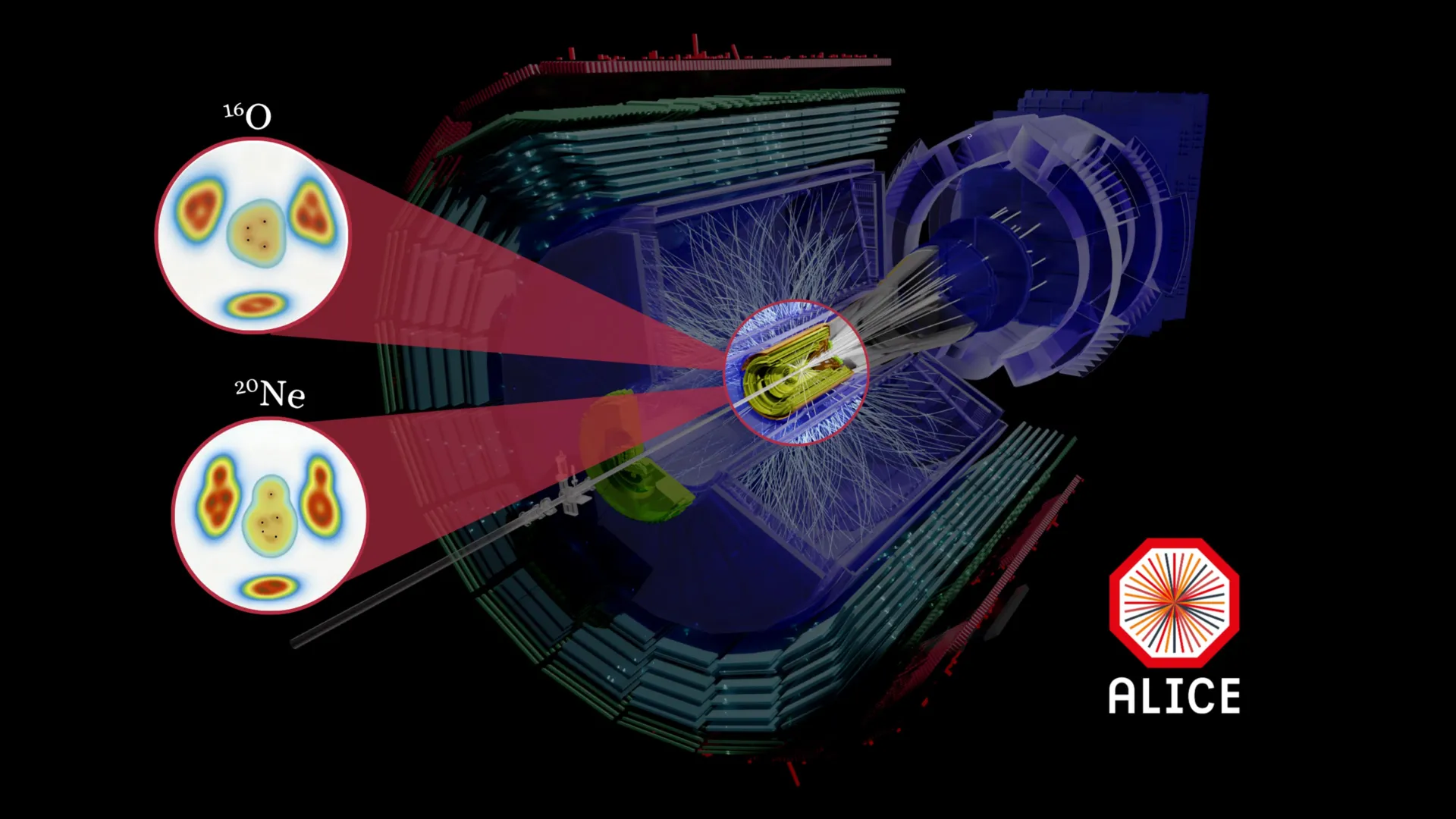
Researchers at CERN have created microscopic versions of the early Universe by colliding surprisingly small atomic nuclei at nearly the speed of light. The collisions produced quark-gluon plasma, the ultra-hot matter believed to have filled the cosmos shortly after the Big Bang. Even more intriguingly, the particles left behind reveal the shape of the nuclei that created them, offering a new way to probe both nuclear physics and the Universe’s earliest moments.
Physicists create a tiny “Big Bang” with surprisingly small atomic nuclei
Researchers at CERN have created microscopic versions of the early Universe by colliding surprisingly small atomic nuclei at nearly the speed of light. The collisions produced quark-gluon plasma, the ultra-hot matter believed to have filled the cosmos shortly after the Big Bang. Even more intriguingly, the particles left behind reveal the shape of the nuclei…
About the Author

Previous Post
Next Post
Leave a Reply
Latest News

Stay Connected
Categories
Business Health India Politics Science Sports Technology Uncategorized World
Tags
About the Author

AF themes
Easy WordPress Websites Builder: Versatile Demos for Blogs, News, eCommerce and More – One-Click Import, No Coding! 1000+ Ready-made Templates for Stunning Newspaper, Magazine, Blog, and Publishing Websites.

Search the Archives
Access over the years of investigative journalism and breaking reports
You May Have Missed
